🎧 Listen to text audio:
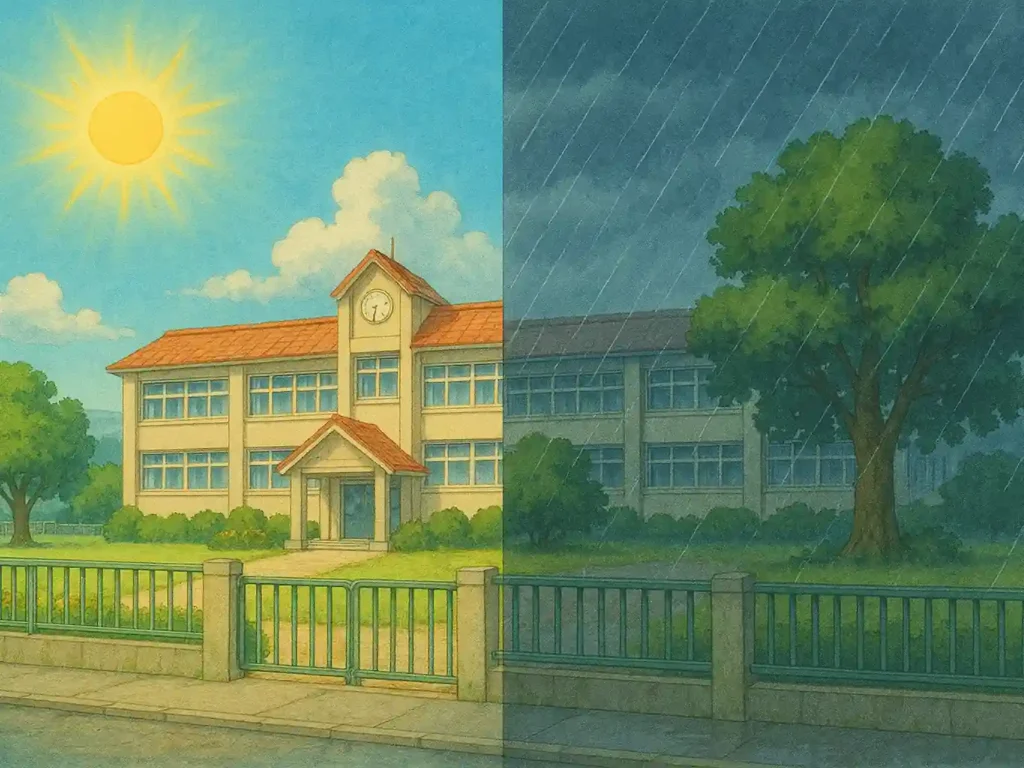
小天: 苏苏,今天 天气 怎么样?
Pinyin
Xiǎotiān: Sūsū, jīntiān tiānqì zěnmeyàng?
English
Xiaotian: Susu, how’s the weather today?
苏苏: 上午 是 晴天,不过 下午 会 下雨。
Pinyin
Sūsū: Shàngwǔ shì qíngtiān, bùguò xiàwǔ huì xiàyǔ.
English
Susu: It’s sunny in the morning, but it will rain in the afternoon.
小天: 一起 去 散步 好吗?
Pinyin
Xiǎotiān: Yìqǐ qù sànbù hǎo ma?
English
Xiaotian: Shall we go for a walk together?
苏苏: 不好意思,我 要 上游泳课。
Pinyin
Sūsū: Bù hǎoyìsi, wǒ yào shàng yóuyǒng kè.
English
Susu: Sorry, I have a swimming class.
小天: 游泳课 几点 开始?
Pinyin
Xiǎotiān: Yóuyǒng kè jǐ diǎn kāishǐ?
English
Xiaotian: What time does the swimming class start?
苏苏: 下午 两点。
Pinyin
Sūsū: Xiàwǔ liǎng diǎn.
English
Susu: At 2:00 p.m.
小天: 现在 几点?
Pinyin
Xiǎotiān: Xiànzài jǐ diǎn?
English
Xiaotian: What time is it now?
苏苏: 一点半了,我 该 走了。
Pinyin
Sūsū: Yī diǎn bàn le, wǒ gāi zǒu le.
English
Susu: It’s already 1:30. I should go.
小天: 好的,再见!
Pinyin
Xiǎotiān: Hǎo de, zàijiàn!
English
Xiaotian: Okay, bye!
语法点 (Grammar Points)
1. Time + 天气 + 怎么样?– Asking about weather
Used to ask how the weather is at a certain time.
文中 (In text):
– 今天天气怎么样?- How’s the weather today?
例(Example):
– 明天天气怎么样?- How’s the weather tomorrow?
– 今晚天气怎么样?- How’s the weather tonight?
2. 会 + Verb – Future Possibility or Prediction
Describes something that will probably happen.
文中 (In text):
– 下午会下雨。- It will rain in the afternoon.
例(Example):
– 明天会很冷。- It will be cold tomorrow.
3. 要 + Verb – Expressing a Plan or Intention
Used to talk about something planned or intended.
文中 (In text):
– 我要上游泳课。– I have (plan to attend) swimming class.
例(Example):
– 他要去学校。– He’s going to school.
4. [Event] + 几点 + Verb – Asking for Time
Used to ask about time and when something happens.
文中 (In text):
– 游泳课几点开始?– What time does swimming class start?
例(Example):
– 电影几点开始?– What time does the movie start?
– 中文课几点结束?– What time does the Chinese class finish?
5. Subject + 该 + Verb – Expressing Necessity
Indicate that someone should or must do something.
文中 (In text):
– 我该走了。– I should go now.
例(Example):
– 我该吃饭了。– I must eat now.
6. [Statement] + 了 – Change of State
This 了 indicates that the situation has changed, or something is now true that wasn’t before.
文中 (In text):
– 一点半了。– It’s 1:30 now. (= Time has changed)
– 我该走了。– I should go now. (= The time to leave has come)
例(Example):
– 天黑了。– It’s gotten dark. (= It wasn’t dark before)
– 下雨了。– It started raining. (= It wasn’t raining before)
Download the PDF Version
Want to read this story offline? Get the PDF version sent directly to your email.
Simply enter your email below, and we’ll send you the downloadable PDF for this lesson.