🎧 Listen to text audio:
玛丽: 苏苏,早上好!今天 很 早 啊。
Pinyin
Mǎlì: Sūsū, zǎoshang hǎo! Jīntiān hěn zǎo a.
English
Mary: Good morning, Susu! It’s very early today.
苏苏: 早上好!我 在 学校 吃 了 早饭。
Pinyin
Sūsū: Zǎoshang hǎo! Wǒ zài xuéxiào chī le zǎofàn.
English
Susu: Good morning! I had breakfast at school.
玛丽: 你 平时 早饭 吃 什么?
Pinyin
Mǎlì: Nǐ píngshí zǎofàn chī shénme?
English
Mary: What do you usually eat for breakfast?
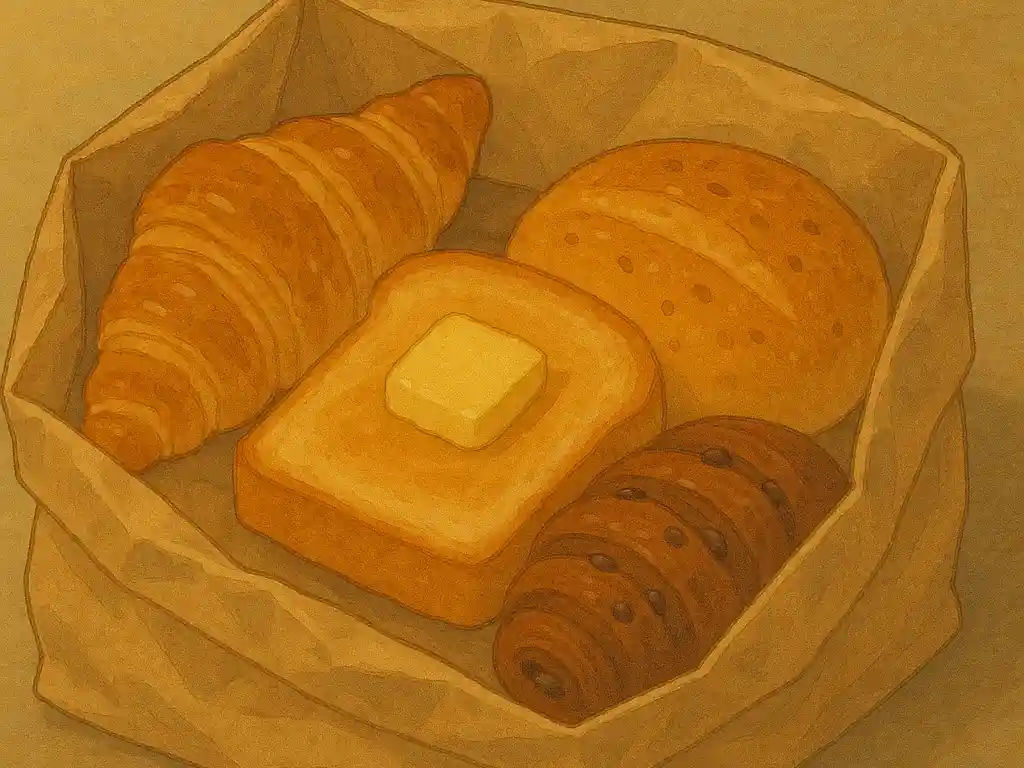
苏苏: 我 经常 吃 面包。
Pinyin
Sūsū: Wǒ jīngcháng chī miànbāo.
English
Susu: I often eat bread.
玛丽: 面包 在 哪里 买 的?
Pinyin
Mǎlì: Miànbāo zài nǎlǐ mǎi de?
English
Mary: Where did you buy the bread?
苏苏: 在 家 旁边 的 面包 店 买的。
Pinyin
Sūsū: Zài jiā pángbiān de miànbāo diàn mǎi de.
English
Susu: I bought it at the bakery next to my home.
玛丽: 今天吃了什么面包?
Pinyin
Mǎlì: Jīntiān chī le shénme miànbāo?
English
Mary: What kind of bread did you eat today?
苏苏: 巧克力 面包,很 好吃!
Pinyin
Sūsū: Qiǎokèlì miànbāo, hěn hǎochī!
English
Susu: Chocolate bread. It was delicious!
语法点 (Grammar Points)
1. Sentence + 啊 – Expressing Emotion or Tone
The particle “啊” is added at the end of a sentence to soften it, express surprise, emphasis, or a casual tone. It’s very common in spoken Chinese and helps the sentence feel more natural and expressive.
文中 (In text):
– 今天很早啊。- It’s very early today (spoken with surprise or casual comment).
例(Example):
– 好漂亮啊!- So pretty! (emphasis)
– 你来了啊。- Oh, you’re here! (acknowledgment)
2. Verb + 了 – Completed Action
Used to express actions that are already completed.
文中 (In text):
– 我在学校吃了早饭。- I ate breakfast at school.
– 今天吃了什么面包?- What kind of bread did you eat today?
例(Example):
– 昨天我吃了 面条。 – I ate noodles yesterday.
3. Subject + 经常 + Verb + Object – Talking about Habits
Indicates a frequently repeated action.
文中 (In text):
– 我经常吃面包。- I often eat bread.
例(Example):
– 他经常 喝 牛奶。 – He often drinks milk.
– 我不经常吃 米饭。- I don’t often eat rice.
4. Verb + 的 – Referring to Completed Actions
[Place/Time/Other Info] + Verb + 的 is a shortened form of “是…的”, used to emphasize how, where, or when a past action happened. The noun (such as 面包) is often omitted when it’s clear from context.
文中 (In text):
– 在家旁边的面包店买的。- (The bread was) bought at the bakery next to home.
(Full form: 面包是在家旁边的面包店买的)
例(Example):
– 书 店 买 的。 – (The book was) bought at the bookstore.
– 昨天 做 的。- (The thing) did yesterday.
Download the PDF Version
Want to read this story offline? Get the PDF version sent directly to your email.
Simply enter your email below, and we’ll send you the downloadable PDF for this lesson.