🎧 Listen to text audio:
中国 年 是 中国 很 重要 的 节日。
Pinyin
Zhōngguó nián shì Zhōngguó hěn zhòngyào de jiérì.
English
Chinese New Year is a very important holiday in China.
春节 的 时候,大家 都 回 家 过年。
Pinyin
Chūnjié de shíhou, dàjiā dōu huí jiā guònián.
English
During the Spring Festival, everyone goes home to celebrate the Chinese New Year.
人们 会 打扫 房子,买 很 多 好吃 的 东西。
Pinyin
Rénmen huì dǎsǎo fángzi, mǎi hěn duō hǎochī de dōngxi.
English
People clean their houses and buy a lot of delicious food.
除夕 晚上,家人 一起 吃 年夜饭。
Pinyin
Chúxī wǎnshang, jiārén yìqǐ chī niányèfàn.
English
On Chinese New Year’s Eve, families eat the Chinese New Year’s Eve dinner together.
大人 给 孩子 红包,孩子 很 高兴。
Pinyin
Dàrén gěi háizi hóngbāo, háizi hěn gāoxìng.
English
Adults give children red envelopes, and the children are very happy.
晚上,人们 喜欢 放 鞭炮,看 烟花。
Pinyin
Wǎnshang, rénmen xǐhuān fàng biānpào, kàn yānhuā.
English
At night, people like to set off firecrackers and watch fireworks.
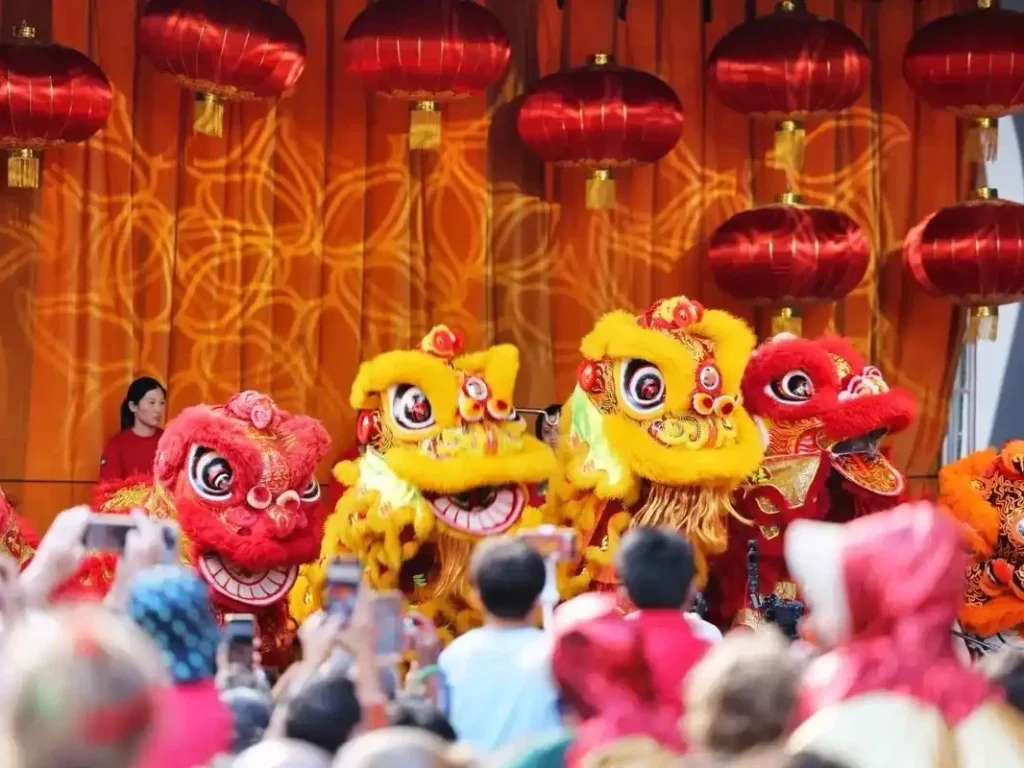
春节 后,有 舞龙舞狮 的 活动,大家 玩 得 很 开心。
Pinyin
Chūnjié hòu, yǒu wǔlóng wǔshī de huódòng, dàjiā wán de hěn kāixīn.
English
After the Spring Festival, there are dragon and lion dance performances, and everyone has a great time.
语法点 (Grammar Points)
1. 会 – Will, can
会 is used to indicate future actions or abilities.
文中 (In text):
– 人们会打扫房子,买很多好吃的东西。- People clean their houses and buy a lot of delicious food.
例 (Example):
– 明天 我会去看 电影。- I will go watch a movie tomorrow.
2. 给 – To give
给 is used to indicate giving something to someone.
文中 (In text):
– 大人给孩子红包,孩子很高兴。- Adults give children red envelopes, and the children are very happy.
例 (Example):
– 妈妈给我一本书。- Mum gave me a book.
3. 的 时候 – When, during
的时候 is used to indicate a specific time when something happens.
文中 (In text):
– 春节的时候,大家都回家过年。- During the Spring Festival, everyone goes home to celebrate the Chinese New Year.
例 (Example):
– 下雨 的时候,人们都 打伞。- When it rains, people all use umbrellas.
4. 后 – After
后 is used to indicate something happening later.
文中 (In text):
– 春节后,有舞龙舞狮的活动。- After the Spring Festival, there are dragon and lion dance performances.
例 (Example):
– 吃了 晚饭 后,妈妈 开始 洗 碗。- After having dinner, Mum starts washing the dishes.
5. Verb + 得 + Adjective – Describing how an action is performed.
This structure is used to describe the manner or degree in which an action is performed. 得 connects the verb and the adjective to indicate how the action was carried out or its intensity.
文中 (In text):
– 大家玩得很开心。- Everyone has a great time.
例 (Example):
– 他 跑 得 很 快。- He runs very fast.
Download the PDF Version
Want to read this story offline? Get the PDF version sent directly to your email.
Simply enter your email below, and we’ll send you the downloadable PDF for this lesson.