🎧 Listen to text audio:
玛丽: 苏苏,我 想 买 点 中式 点心。
Pinyin
Mǎlì: Sūsū, wǒ xiǎng mǎi diǎn zhōngshì diǎnxīn.
English
Mary: Susu, I want to buy some Chinese pastries.
苏苏: 好 呀,就 在 前面,我们 一起 去 吧!
Pinyin
Sūsū: Hǎo ya, jiù zài qiánmiàn, wǒmen yìqǐ qù ba!
English
Susu: Sure, it’s just ahead, let’s go together!
玛丽: 太 好了,我们 现在 就去吧。
Pinyin
Mǎlì: Tài hǎole, wǒmen xiànzài jiù qù ba.
English
Mary: Great! Let’s go now.
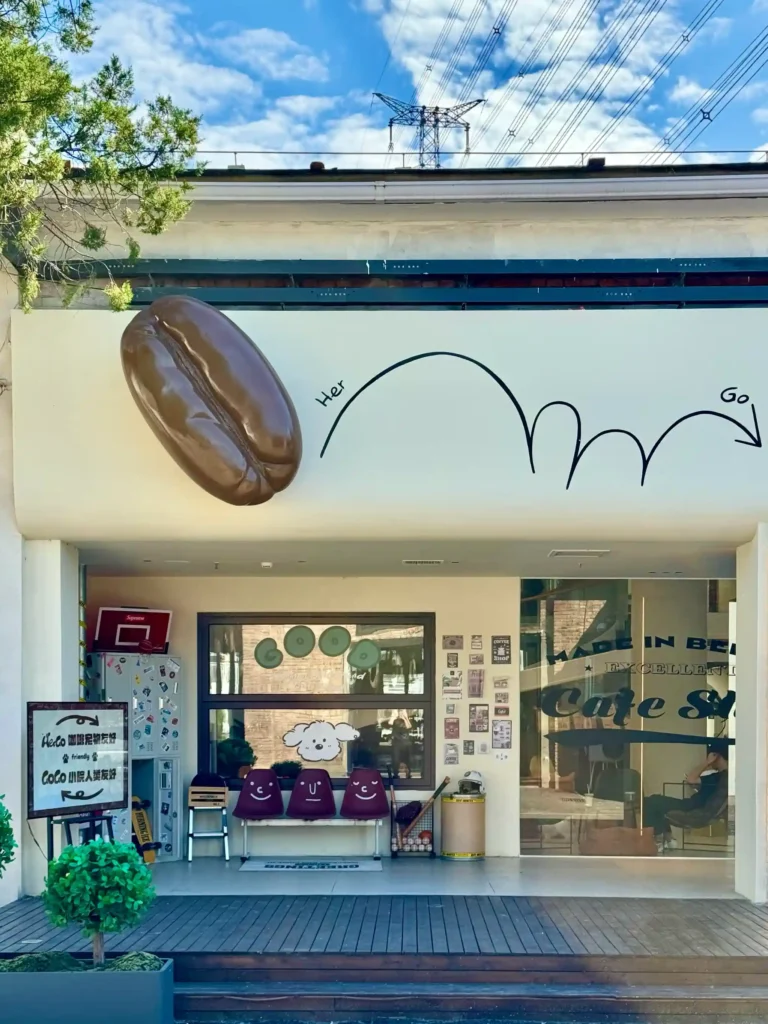
苏苏: 就是 这 家 店,稻香村,在 中国 有 两 百 多 年 的 历史。
Pinyin
Sūsū: Jiùshì zhè jiā diàn, Dàoxiāngcūn, zài Zhōngguó yǒu liǎng bǎi duō nián de lìshǐ.
English
Susu: This is the store, Daoxiangcun, which has over 200 years of history in China.
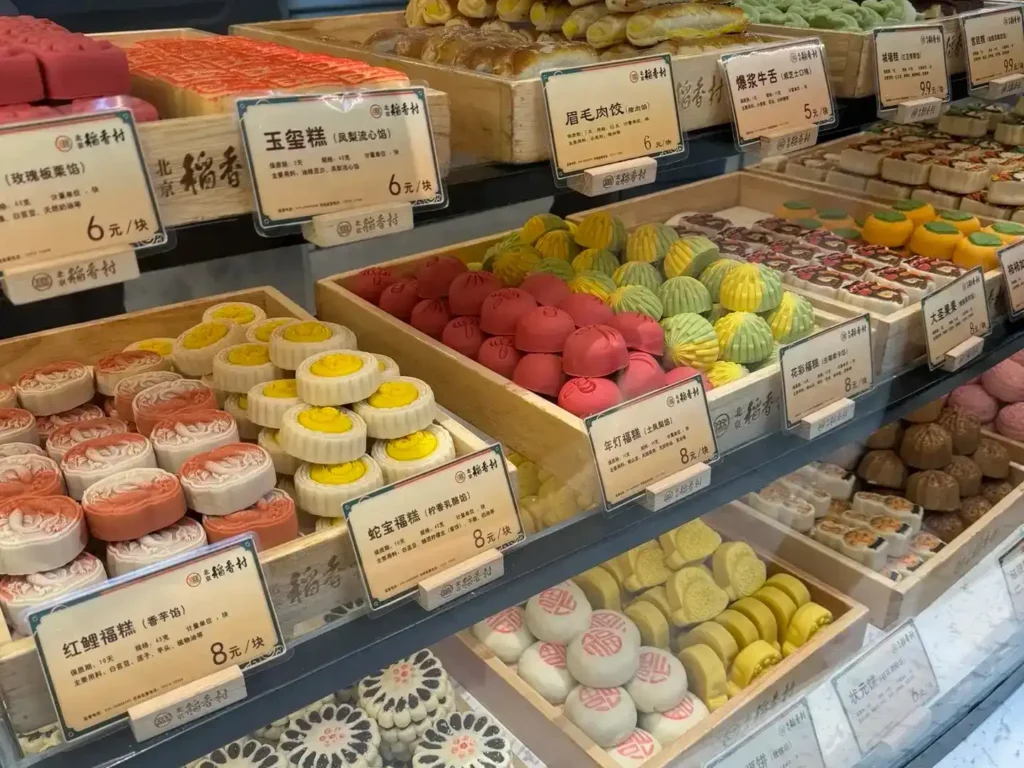
玛丽: 哇,这里 的点心 好 漂亮,看上去 很 好吃,也 不 贵。
Pinyin
Mǎlì: Wa, zhèlǐ de diǎnxīn hǎo piàoliang, kàn shàngqù hěn hǎochī, yě bù guì.
English
Mary: Wow, the pastries here are so beautiful, they look delicious and they’re not expensive.
苏苏: 你 可以 选 一个点心 盒,把 喜欢 的点心 放 进去。
Pinyin
Sūsū: Nǐ kěyǐ xuǎn yīgè diǎnxīn hé, bǎ xǐhuān de diǎnxīn fàng jìnqù.
English
Susu: You can choose a pastry box and put your favorite pastries inside.
玛丽: 点心盒也好漂亮 呢。有 哪些 推荐 的点心 呢?
Pinyin
Mǎlì: Diǎnxīn hé yě hǎo piàoliang ne. Yǒu nǎxiē tuījiàn de diǎnxīn ne?
English
Mary: The pastry boxes are also so pretty. What pastries do you recommend?
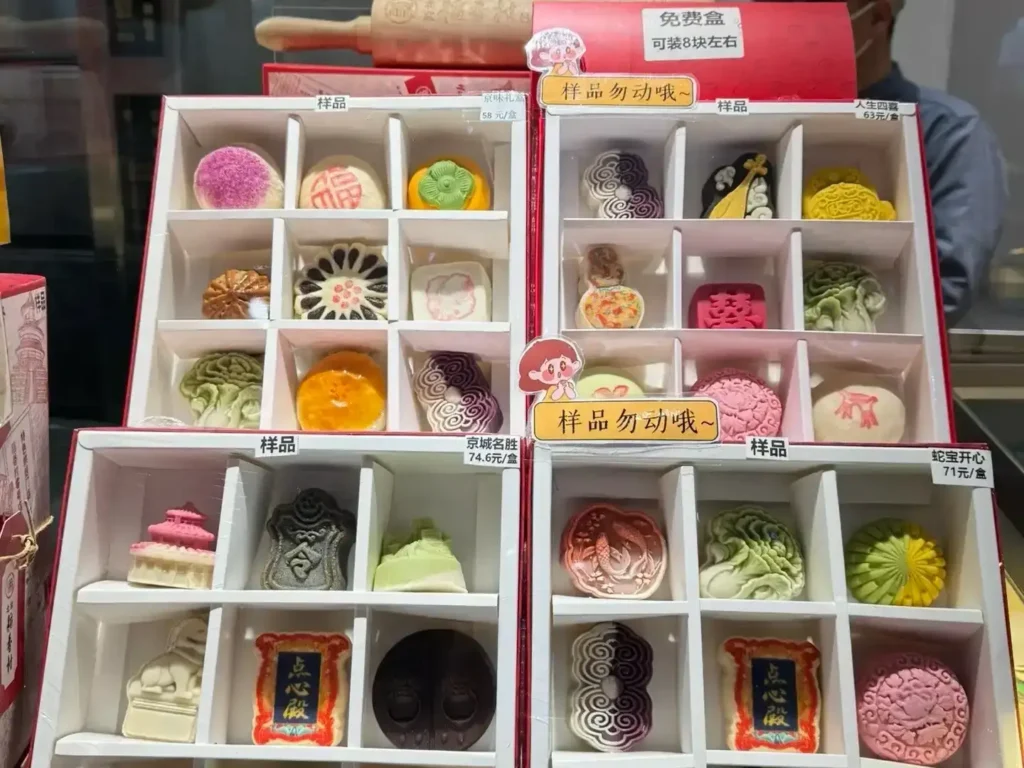
苏苏: 如果 不 知道 怎么 选,也有 店员 搭配 好的 礼盒 哦。
Pinyin
Sūsū: Rúguǒ bù zhīdào zěnme xuǎn, yě yǒu diànyuán dāpèi hǎo de lǐhé ō.
English
Susu: If you don’t know what to choose, there are also gift boxes prepared by the staff.
玛丽: 让我想想。
Pinyin
Mǎlì: Ràng wǒ xiǎng xiǎng.
English
Mary: Let me think for a moment.
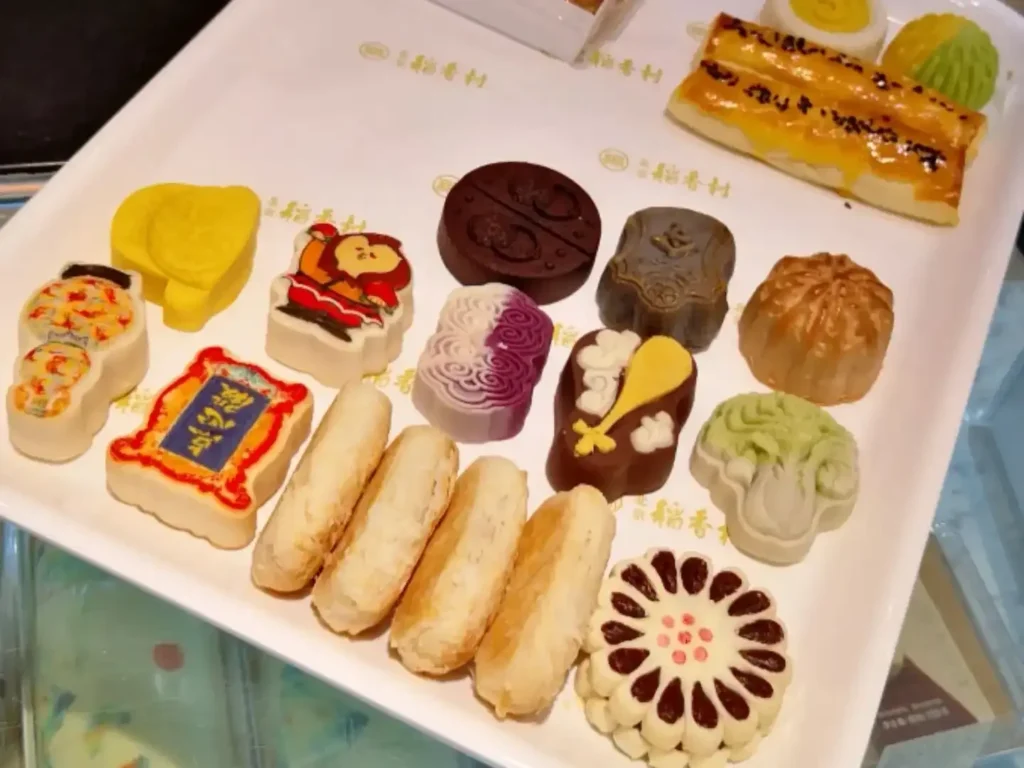
苏苏: 呀,你选了 这么 多!😲
Pinyin
Sūsū: Ya, nǐ xuǎnle zhème duō!
English
Susu: (Wow) You’ve chosen so many!
玛丽: 因为 我 都 好喜欢!😊
Pinyin
Mǎlì: Yīnwèi wǒ dōu hǎo xǐhuān!
English
Mary: Because I like them all!
语法点(Grammar Points)
1. 就 + 在 + Place – Indicating exact location
This structure means right at or exactly at a certain place
文中 (In text):
– 就在前面。(It’s just ahead)
例 (Example):
– 我 的 家 就 在 学校 旁边。(My home is right next to the school.)
2. 现在 + 就 + Verb – Indicating “immediacy” (right away)
This structure means right now or immediately
文中 (In text):
– 我们现在就去吧。(Let’s go now.)
例 (Example):
– 他 一 到 家 就 开始 做 作业。(As soon as he got home, he immediately started his homework.)
3. 就是 + Noun – Emphasising or confirming something
This structure means exactly, precisely or this is it.
文中 (In text):
– 就是这家店。(This is the store.)
例 (Example):
– 这 就 是 我 要 的 书!(This is exactly the book I want!)
4. 呢 – Emphasis or Reflection
When used at the end of a statement, 呢 adds emphasis, making the sentence sound more casual, reflective, or expressive. It is often used to convey admiration, surprise, or highlight something.
文中 (In text):
– 点心盒也好漂亮呢。(The pastry boxes are also so pretty!)
例 (Example):
– 这 本 书 很 好 看 呢。(This book is really interesting!)
5. 呢 – Questions
呢 is often added at the end of a question to indicate that the speaker expects a more detailed or specific response. It can soften the question, making it sound more conversational and less direct.
文中 (In text):
– 有哪些推荐的点心呢? (What pastries do you recommend?)
例 (Example):
– 我 的 手机 呢? (Where is my mobile phone?)
Download the PDF Version
Want to read this story offline? Get the PDF version sent directly to your email.
Simply enter your email below, and we’ll send you the downloadable PDF for this lesson.