🎧 Listen to text audio:
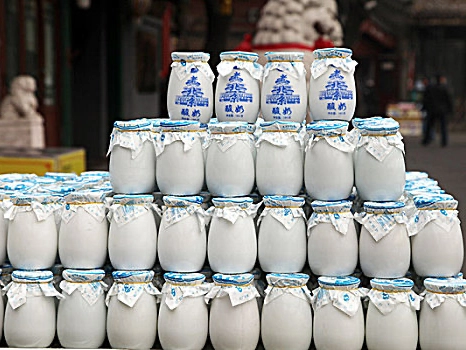
老酸奶 是 一种 酸奶。
Pinyin
Lǎo suānnǎi shì yī zhǒng suānnǎi.
English
Traditional yogurt is a type of yogurt.
它 很 酸,也 很 香。
Pinyin
Tā hěn suān, yě hěn xiāng.
English
It is very sour and also very fragrant.
老酸奶是 白色 的。
Pinyin
Lǎo suānnǎi shì báisè de.
English
Traditional yogurt is white.
它是 用 牛奶 做 的。
Pinyin
Tā shì yòng niúnǎi zuò de.
English
It is made from milk.
老酸奶 放 在 小 瓶子 里。
Pinyin
Lǎo suānnǎi fàng zài xiǎo píngzi lǐ.
English
Traditional yogurt is put in small bottles.
你 可以 用 勺子 吃。
Pinyin
Nǐ kěyǐ yòng sháozi chī.
English
You can eat it with a spoon.
很 多 人 喜欢 老酸奶,因为 它 很 好吃。
Pinyin
Hěn duō rén xǐhuan lǎo suānnǎi, yīnwèi tā hěn hǎochī.
English
Many people like traditional yogurt because it is delicious.
你 喝 过 老酸奶 吗?
Pinyin
Nǐ hē guò lǎo suānnǎi ma?
English
Have you ever had traditional yogurt?
语法点 (Grammar Points)
1. Subject + 是 + Noun – To be (am/is/are)
The verb 是 is used to indicate identity, classification, or description of the subject. It is commonly used to connect a subject with a noun but not with adjectives (for adjectives, use 很 instead).
文中 (In text):
– 老酸奶是一种酸奶。- Traditional yogurt is a type of yogurt.
例 (Example):
– 他是我的 朋友。- He is my friend.
2. Subject + 很 + Adjective – To describe a subject’s state or quality
很 is often used before adjectives to describe a person or thing. In Chinese, adjectives usually need 很 or another degree adverb (e.g., 非常, 太) to sound natural, even if no strong emphasis is intended.
文中 (In text):
– 它很酸,也很香。- It is very sour and also very fragrant.
例 (Example):
– 这 本 书 很 有趣。- This book is very interesting.
3. 用 + Noun + Verb – To use
用 means “to use,” and it is followed by an object and a verb.
文中 (In text):
– 你可以用勺子吃。- You can eat it with a spoon.
例 (Example):
– 用 牙刷 刷牙。- Use toothbrush to brush teeth.
4. 因为 – Because
因为 introduces the reason.
文中 (In text):
– 很多人喜欢老酸奶,因为它很好吃。- Many people like traditional yogurt because it is delicious.
例 (Example):
– 她没去 超市,因为 下雨 了。- She didn’t go to the supermarket, because it rained.
5. 过 – Indicate past experience
过 (guo) is used after a verb to indicate past experiences.
文中 (In text):
– 你喝过老酸奶吗?- Have you ever had traditional yogurt?
例 (Example):
– 我 去 过 北京。 – I’ve been to Beijing.
Download the PDF Version
Want to read this story offline? Get the PDF version sent directly to your email.
Simply enter your email below, and we’ll send you the downloadable PDF for this lesson.