🎧 Listen to text audio:
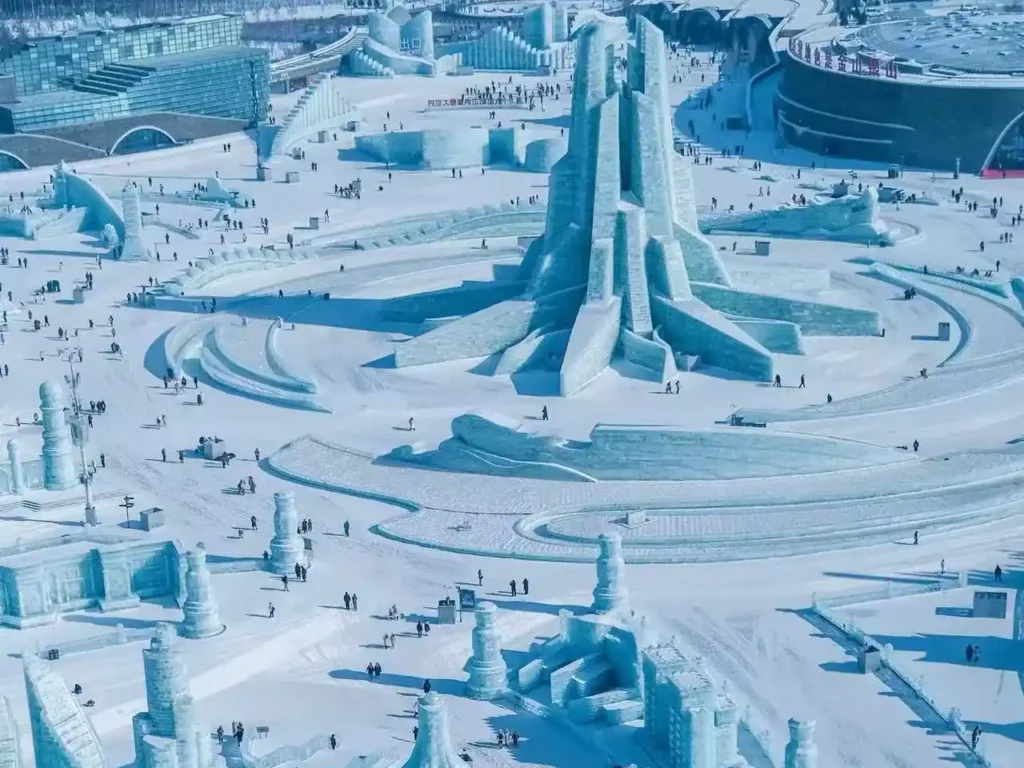
每年 冬天,哈尔滨 都 有 一 个 很 特别 的 景点,叫 “冰 雪 大 世界”。这里 有 很 多 冰 做 的 房子 和 雕像。晚上,灯光 亮 起来,非常 美丽。
English
Every winter, Harbin has a very special attraction called “Ice and Snow World.” There are many ice-made houses and sculptures here. At night, the lights turn on, making it very beautiful.
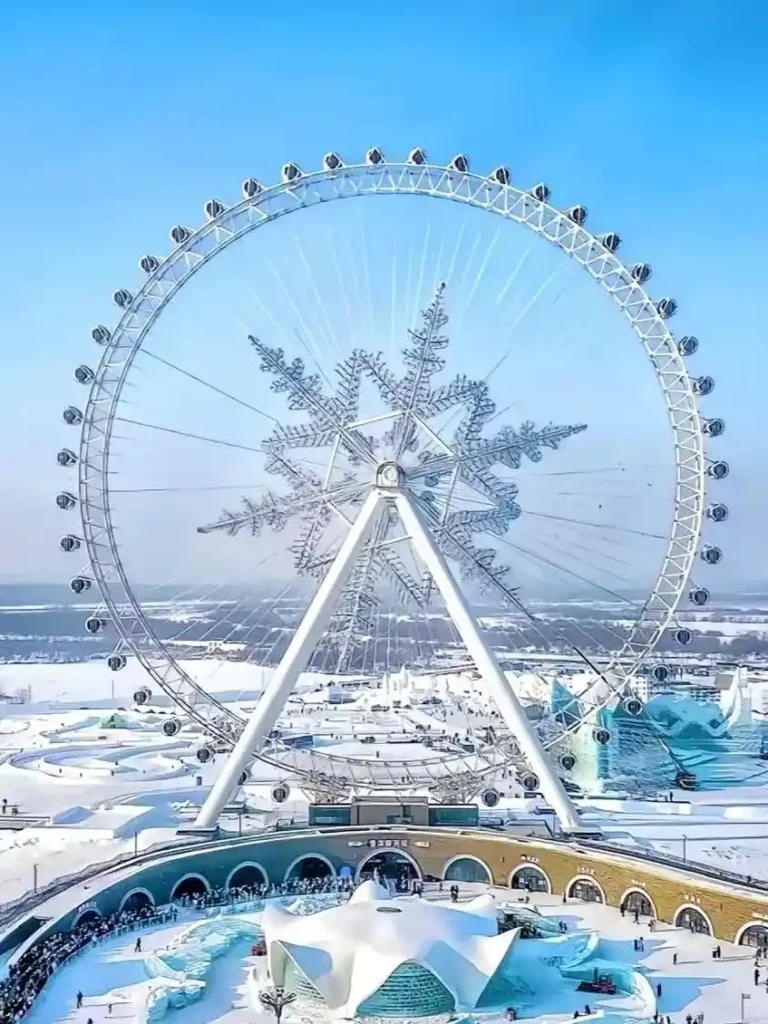
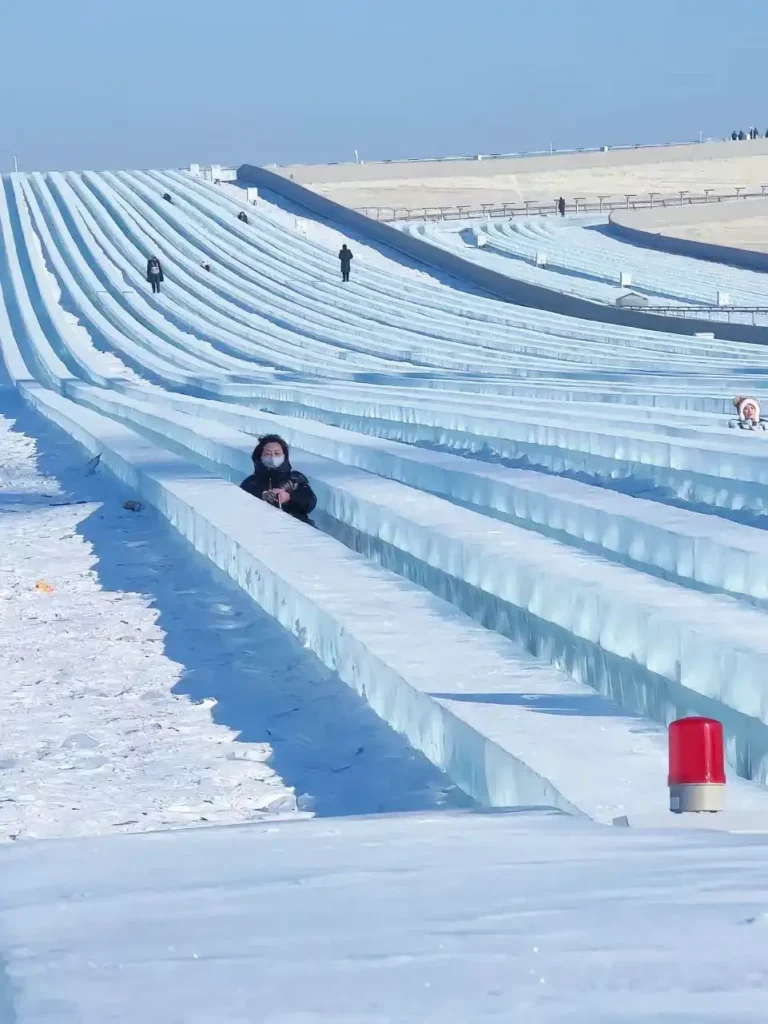
游客 可以 在 这里 体验 冰雪 城堡、雪花 摩天轮 和 超 长 冰 滑梯。很多人喜欢在这里 拍照,留下 美好 回忆。
English
Visitors can experience the ice castle, snowflake Ferris wheel, and super-long ice slide here. Many people enjoy taking photos to capture wonderful memories.
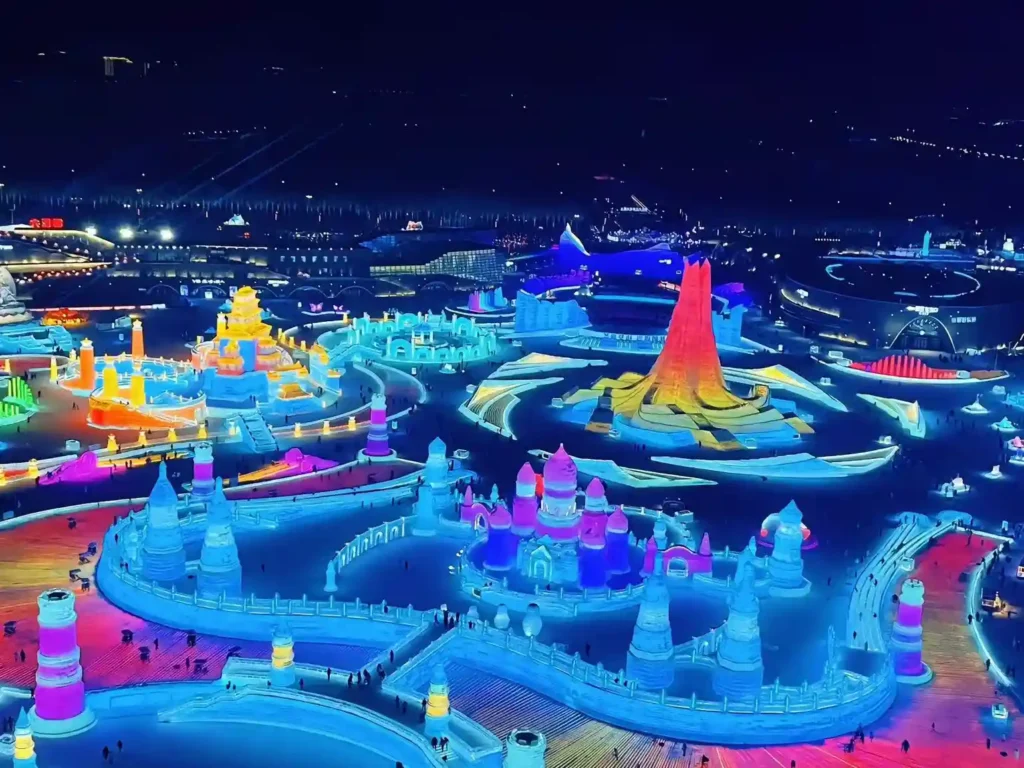
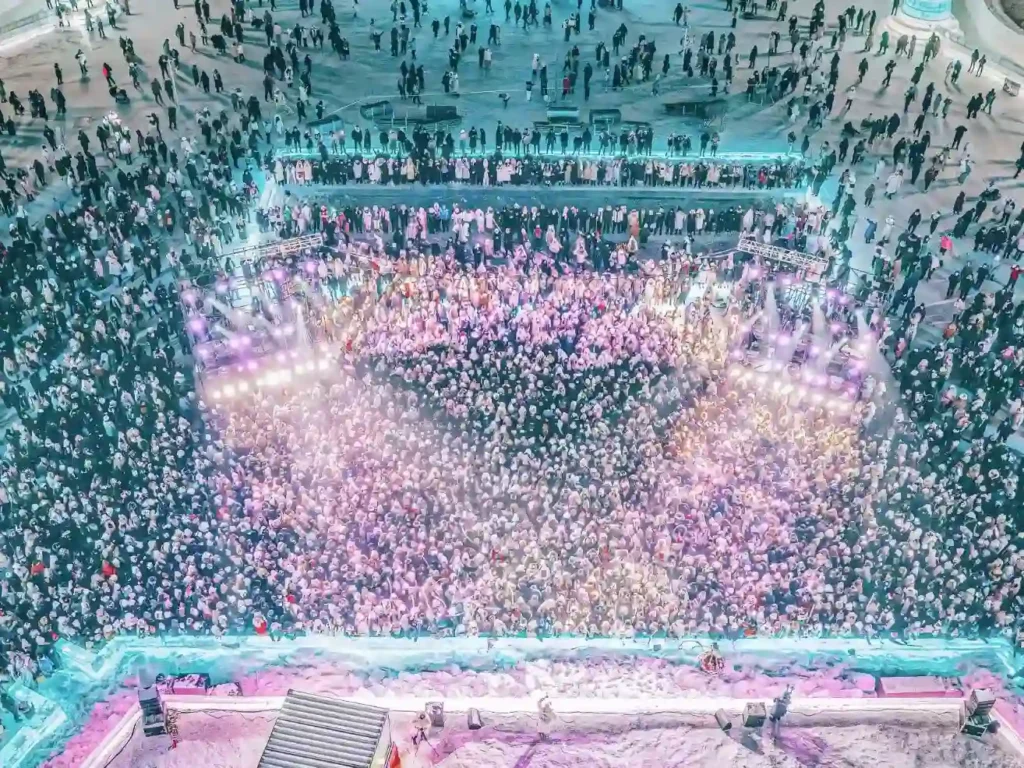
冰雪大世界里还有很多 表演,比如 冰上 舞蹈 和 灯光 秀。晚上,冰雪大世界 变身 成 冰雪 派对,这里的 气氛 非常 热闹。
English
There are also many performances in Ice and Snow World, such as ice dancing and light shows. At night, the park transforms into an ice and snow party, creating a lively atmosphere.
每年,很多 国内外 的游客 都 来 这里 参观。他们 觉得 哈尔滨的冬天很美,很 有意思。
English
Every year, many tourists from both China and abroad visit here. They think Harbin’s winter is beautiful and very interesting.
语法点 (Grammar Points)
1. 都 – All or Both
The pattern “Subject + 都 + Verb / Adjective” is used to emphasise that something applies to all members of a group.
文中 (In text):
– 每年冬天,哈尔滨都有一个很特别的景点。(Every winter, Harbin has a very special attraction.)
例 (Example):
– 大家 都 饿 了。(Everybody is hungry.)
2. 体验 – To experience
The pattern “Subject + 体验 + Object” is used for experiencing something firsthand, especially activities.
文中 (In text):
– 游客可以在这里体验冰雪城堡。(Visitors can experience the ice castle here.)
例 (Example):
– 我 想 体验 跳伞。(I want to experience sky-diving.)
3. 变身 成 – To transform into
The pattern “Subject + 变身成 + Noun” is used for experiencing something firsthand, especially activities.
文中 (In text):
– 冰雪大世界变身成冰雪派对。(Ice and Snow World transforms into an ice and snow party.)
例 (Example):
– 下班 后,她 变身 成 派对 女王。(After work, she transformed into a party queen.)